
About Hypogonadism and TRT

Balanced Hormones, Better HealthRestoring T levels may improve his overall health

Hypogonadism affects about 30% of American men 20 years of age and older and increases in prevalence as testosterone (T) levels decline with age.1,2

KYZATREX™ is indicated for TRT in adult males in conditions associated with a deficiency or absence of endogenous testosterone. The efficacy of KYZATREX™ has not been established for hypogonadal conditions that are not associated with structural or genetic etiologies (e.g., age-related hypogonadism).

Symptoms of Low Testosterone LevelsRecognize Low-T 3,4

Fatigue/low energy

Low sex drive

Difficulty sleeping

Lower muscle mass

Decreased bone density

Weight gain

Depression

Anxiety


Studies show that restoring T levels may improve signs and symptoms associated with testosterone deficiency.3,9,a


Chronic disease and comorbidities are significantly more prevalent among men with T deficiency, including obesity, type 2 diabetes, cardiovascular disease, liver disease, and depression.1,3,5-8

aA series of observational studies evaluating the effect of testosterone therapy on various health conditions.11,12,15

Low Testosterone Therapy

Testosterone Replacement Therapy (TRT)Restoring the balance

Testosterone replacement therapy (TRT) to get T levels back to a normal range About 300 to 1000 ng/dL is considered a normal testosterone level (< 300 ng/dL is considered testosterone deficiency). The goal or TRT is to keep T levels within the normal range, avoiding serum concentrations that may be too low to support efficacy or too high, thereby increasing the risk of adverse effects.1,3,16 usually consists of testosterone patches, gels, pellets, or injections and, for some, oral medications.9

Characteristics of different TRTsWhich TRT is appropriate for your patients?

  KYZATREX™ Injection Implanted Pellets Gel Patches
Oral / Easy to swallow
Invisible
No mess
Painless
Flexible Dosing

KYZATREX™ is a novel testosterone undecanoate that has a smooth pharmacokinetic profile, strong safety profile, and wide dosing range for individualized TRT.

Daily oral dosing

Taking KYZATREX™ is easyNo gel, injection, pellet or patch, Just two oral daily doses, down the hatch

Just two oral doses of KYZATREX™ a day with food a can restore testosterone to normal levels and keep them there.
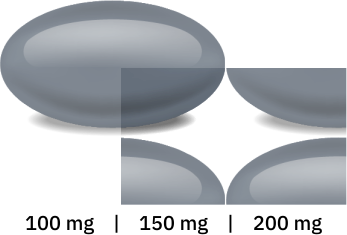
FlexibleDifferent doses for different dudes

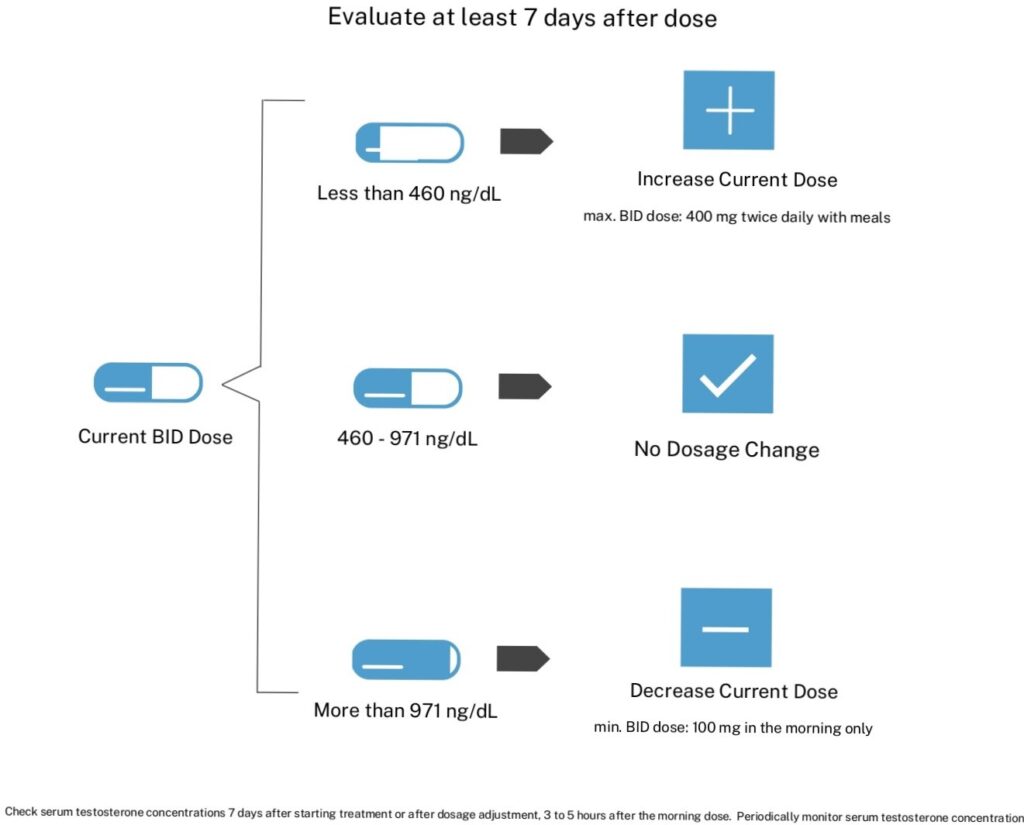
Meet your patients testosterone needs with a range of KYZATREX™ doses. The recommended starting dose of KYZATREX™ is 200 mg orally BID with the morning and evening meals. After 7 days of starting treatment, dose may be adjusted to meet target testosterone concentration.

And BioavailableFormulated to drive absorption to improve clinical results

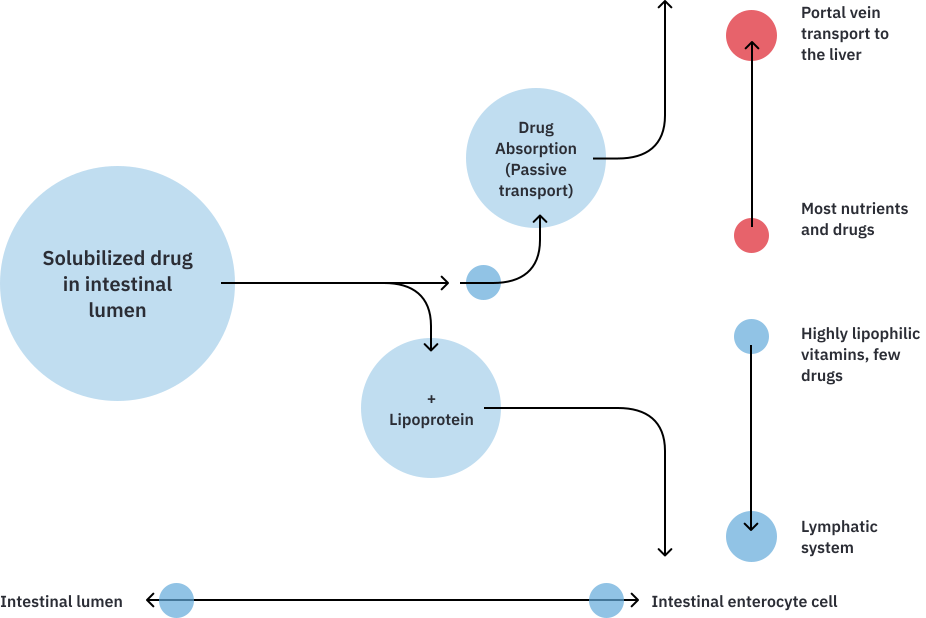
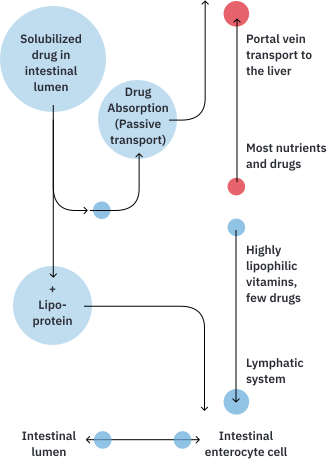
KYZATREX™ is formulated to utilize lymphatic absorption to bypass first-pass metabolism and drive uptake. With the use of phytosterols as GRAS excipients to drive absorption, KYZATREX™ was designed for clinical efficacy and safety.

a KYZATREX™ must be taken with food.

Titration Guide
Lymphatic Absorption KYZATREX™ is well absorbed from the GI tract when taken with food.
About KYZATREX™

KYZATREX™, put to the test – The power of balance

96%Effective!

In a clinical study of 139 men with low testosterone, 96% had normal testosterone levels at Day 90.*

*End of clinical study completers

Most common adverse effects in clinical studies a

Side effects in ≥2% of Patients Receiving KYZATREX™ (n=155)

  • Hypertension 2.6%

In a 12-month, open-label clinical study, men who received KYZATREX™ 200 mg QD to 400 mg BID (n = 202) reported the following additional adverse reactions: headache, arthralgia diarrhea, hemoglobin increased, anxiety, constipation, peripheral edema, and PSA increased.

PSA, prostate-specific antigen.
a In the 6-month extension study of 155 patients taking KYZATREX™, 1 patient discontinued because of an adverse reaction (acne).

It’s all in the delivery

Each KYZATREX™ oral capsule is uniquely formulated KYRATREX is the first prescription medicine to use phytosterols (naturally occurring compounds found in plants) to boost absorption rates. Phytosterols are generally recognized as safe (GRAS) excipients. to be easily absorbed and bypass your liver. That means it works efficiently, without causing liver damage.

Blood Pressure

Side effects in ≥2% of Patients Receiving KYZATREX™ (n=155)

  • High Blood Pressure 2.6%

In a study of 155 patients taking KYZATREX™ for six months, only one discontinued because of a side effect, in this case, acne.

  • Endpoint MRS-TU-2019EXT
    Study (N = 155)
  • ABPM17
  • Change in 24-hour mean SBP from baseline after 4 months of KYZATREX™, mmHg (95% CI) 1.7
    (0.3-3.1)
  • Change in 24-hour mean SBP from baseline after 6 months of KYZATREX™, mmHg (95% CI) 1.8
    (0.3-3.2)
  • In-clinic Blood Pressure Cuff
  • Change from baseline in mean SBP after 4 months of KYZATREX™, mmHg (95% CI) 2.7
    (0.9-4.5)
  • Change from baseline in mean SBP after 6 months of KYZATREX™, mmHg (95% CI) 2.4
    (0.6-4.2)
  • ABPM, ambulatory blood pressure monitoring; CI, confidence interval; SBP, systolic blood pressure.
  • Diastolic blood pressure was not significantly different from baseline.
  • A total of 5/155 (3.2%) participants started taking new antihypertensive medication after study start. No participants had a dose increase in their antihypertensive medication by the end of treatment.
  • A history of antihypertensive treatment and diabetes mellitus at baseline were significant factors related to ABPM SBP increases.

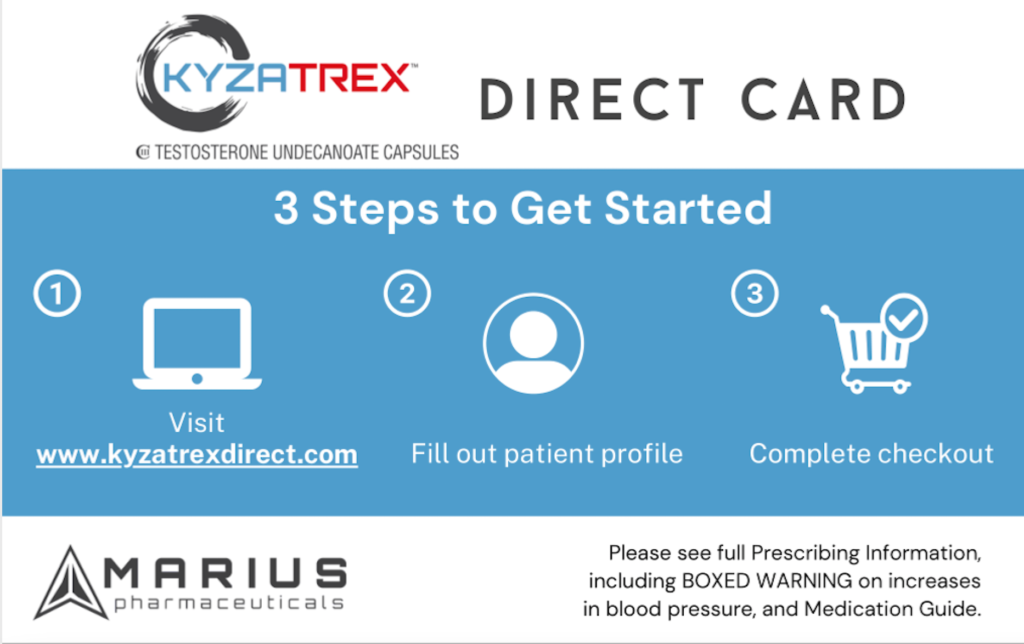
Get KYZATREX™

Submit eRx on EMR for Fulfillment through Eagle Specialty Pharmacy: (Only available through Eagle Specialty Pharmacy)

  • NPI: 1487905840
    NCPDP: 5711975
    Name: Eagle Pharmacy
    Address: Lakeland, FL 33810

Instructions for Patient to Order Online

  • Price: $159/month – Cash Only (Not covered by insurance)

For office collateral, including KYZATREX™ Direct Cards, please email info@mariuspharma.com

Call 888-994-1950 for Assistance

Support & Resources

Materials Coming Soon

Important Safety Information for KYZATREX™ (testosterone undecanoate)

KYZATREX™ can cause blood pressure (BP) increases that can increase the risk of major adverse cardiovascular events (MACE), including non-fatal myocardial infarction, non-fatal stroke and cardiovascular death.

INDICATION

KYZATREX™ (testosterone undecanoate) capsules, CIII, is indicated for testosterone replacement therapy in adult males for conditions associated with a deficiency or absence of endogenous testosterone:

  1. Primary hypogonadism (congenital or acquired): testicular failure due to conditions such as cryptorchidism, bilateral torsion, orchitis, vanishing testis syndrome, orchiectomy, Klinefelter syndrome, chemotherapy, or toxic damage from alcohol or heavy metals. These men usually have low serum testosterone concentrations and gonadotropins (follicle-stimulating hormone (FSH), luteinizing hormone (LH)) above the normal range.
  2. Hypogonadotropic hypogonadism (congenital or acquired): gonadotropin or luteinizing hormone-releasing hormone (LHRH) deficiency, pituitary-hypothalamic injury from tumors, trauma, or radiation. These men have low serum testosterone concentrations but have gonadotropins in the normal or low range.

Limitations of Use

Safety and efficacy of KYZATREX™ in males less than 18 years old have not been established.

Important Safety Information for KYZATREX™ (testosterone undecanoate)

WARNING: BLOOD PRESSURE INCREASES

  1. KYZATREX™ can cause blood pressure (BP) increases that can increase the risk of major adverse cardiovascular events (MACE), including non-fatal myocardial infarction, non-fatal stroke and cardiovascular death.
  2. Before initiating KYZATREX™, consider the patient’s baseline cardiovascular risk and ensure BP is adequately controlled.
  3. Periodically monitor for and treat new-onset hypertension or exacerbations of pre-existing hypertension and re-evaluate whether the benefits of KYZATREX™ outweigh its risks in patients who develop cardiovascular risk factors or cardiovascular disease on treatment.
  4. Due to this risk, use KYZATREX™ only for the treatment of men with hypogonadal conditions associated with structural or genetic etiologies.

Contraindications

KYZATREX™ is contraindicated in patients with carcinoma of the breast or known or suspected carcinoma of the prostate; women who are pregnant (testosterone may cause fetal harm); patients with known hypersensitivity to KYZATREX™ or any of its ingredients; and men with hypogonadal conditions that are not associated with structural or genetic etiologies, as KYZATREX™ has not been established for these conditions and there is a risk of increased BP that can increase the risk of MACE.

Warnings and Precautions

Polycythemia. Check hematocrit prior to initiation and every 3 months during treatment to detect increased red blood cell mass and polycythemia. If hematocrit becomes elevated, stop KYZATREX™ until the hematocrit decreases to an acceptable level. If hematocrit increases after KYZATREX™ is restarted, discontinue treatment.

Cardiovascular Risk. Long-term clinical trials have not been conducted to assess the cardiovascular outcomes of testosterone replacement therapy in men. Other studies have been inconclusive for determining the risk of MACE with testosterone use compared to non-use.

Worsening of Benign Prostatic Hyperplasia (BPH) and Potential Risk of Prostate Cancer. Monitor patients for worsening of signs and symptoms of BPH. Evaluate patients for prostate cancer prior to initiating and during treatment with androgens.

Venous Thromboembolism (VTE). VTE, including deep vein thrombosis (DVT) and pulmonary embolism (PE), have been reported in patients using testosterone. Discontinue KYZATREX™ if VTE is suspected and initiate appropriate workup and management.

Abuse of Testosterone and Monitoring of Testosterone Concentrations. Testosterone has been subject to abuse, typically at doses higher than indicated and in combination with other anabolic androgenic steroids. If abuse is suspected, check testosterone levels to ensure they are within therapeutic range. Counsel patients concerning the serious adverse reactions associated with abuse and consider the possibility of abuse in suspected patients who present with serious cardiovascular or psychiatric adverse events.

Potential for Adverse Effects on Spermatogenesis. Large doses of androgens can suppress spermatogenesis. Inform patients of this risk before prescribing KYZATREX™.

Edema. Edema may occur in patients with pre-existing cardiac, renal, or hepatic disease. In addition to discontinuing KYZATREX™, diuretic therapy may be required.

Sleep Apnea: KYZATREX™ may potentiate sleep apnea in some patients, especially those with risk factors such as obesity or chronic lung disease.

Lipid Changes. KYZATREX™ may affect serum lipid profiles. Monitor patient lipid concentrations periodically; if necessary, adjust dosage of lipid lowering drug(s) or discontinue KYZATREX.™

Other warnings include: hepatic adverse effects from prolonged use of high doses of methyltestosterone; gynecomastia; hypercalcemia in cancer patients; and decreased thyroxine-binding globulin.

Adverse Events

The most common adverse reaction of KYZATREX™ (incidence ≥ 2%) is hypertension (2.6%).

Drug Interactions

Insulin. KYZATREX™ can cause changes in insulin sensitivity or glycemic control. Androgens may decrease blood glucose requiring a decrease in the dose of anti-diabetic medication.

Oral Vitamin K Antagonist Anticoagulants. Anticoagulant activity may be seen with androgens. More frequent monitoring of international normalized ratio (INR) and prothrombin time are recommended in patients taking warfarin, especially at initiation and termination of androgen therapy.

Corticosteroids. Concurrent use of testosterone with corticosteroids may increase fluid retention and requires careful monitoring, particularly in patients with cardiac, renal, or hepatic disease.

Medications that May Also Increase Blood Pressure. Concomitant administration of medications drugs known to increase BP with KYZATREX™ may lead to additional BP increases.

Use in Specific Populations

Females. KYZATREX™ is contraindicated in pregnant women and is not indicated for use in females.

Pediatric Use. The safety and efficacy of KYZATREX™ in pediatric patients less than 18 years old have not been established. Use in pediatric patients may result in acceleration of bone age and premature closure of epiphyses.

Geriatric Use. KYZATREX™ clinical studies did not include patients ≥65 years. It is unknown whether these patients respond differently from younger adult patients or have an increased risk of cardiovascular disease and prostate cancer. Geriatric patients treated with androgens may be at risk for worsening of signs and symptoms of BPH.

Please note that this information is not comprehensive. Please click here for the Full Prescribing Information, including BOXED WARNING.

To report SUSPECTED ADVERSE REACTIONS, contact Marius Pharmaceuticals at 1-833-949-5040 or FDA at 1-800-FDA-1088 or www.fda.gov/medwatch.

Back To Top Button Image